The Ultimate Beginner’s Guide to Glamping: Everything You Need to Know Before Your First Family Adventure
If you’ve always wanted to spend time in nature but the thought of sleeping on the ground, packing dozens of camping supplies, or setting up a complicated campsite sounds overwhelming, glamping might be exactly what you’re looking for.
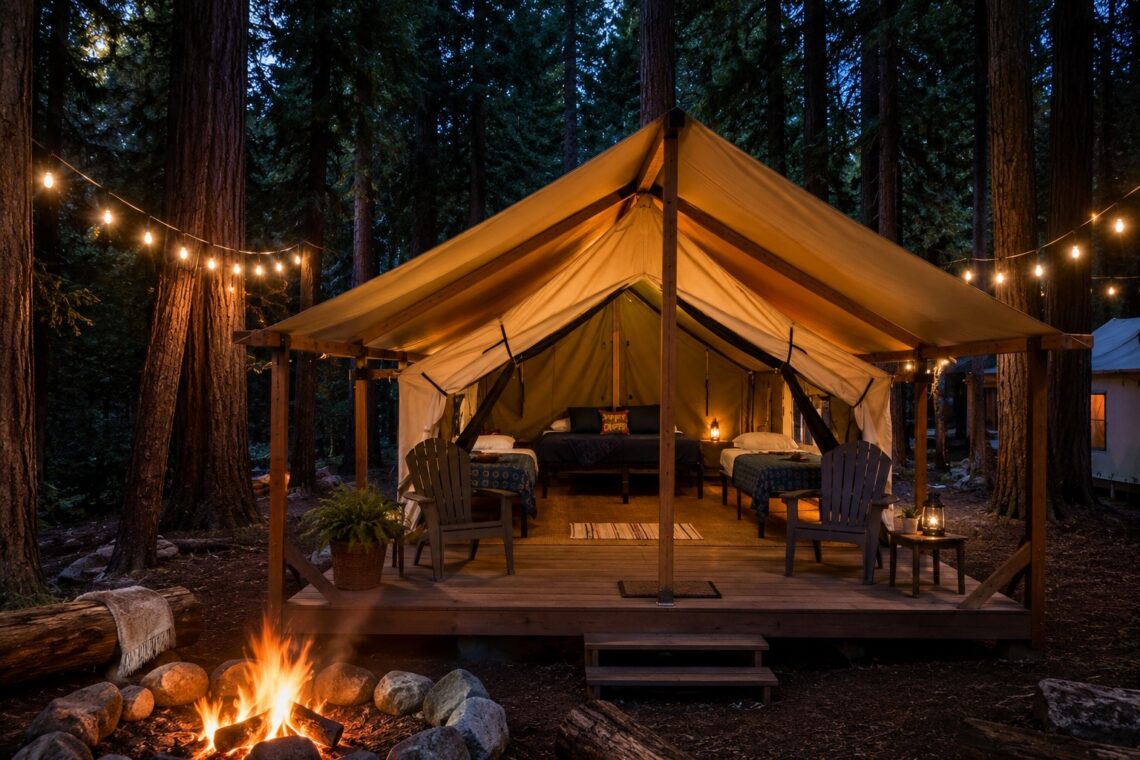
Glamping combines the beauty of camping with many of the comforts of home. Instead of pitching a tent from scratch and carrying every piece of equipment yourself, you stay in a furnished tent, cabin, yurt, safari tent, or tiny cabin while still enjoying campfires, hiking, stargazing, and peaceful mornings surrounded by nature.
For our family, glamping became the perfect way to introduce our kids to the outdoors without making the experience stressful. We still get to unplug from everyday life, enjoy campfires, hike beautiful trails, and wake up to birds singing, but we also appreciate having comfortable beds, electricity, clean restrooms, and a few modern conveniences.
If you’re wondering whether glamping is worth trying, this guide covers everything you need to know before your first trip.
What Is Glamping?
Glamping simply means “glamorous camping.” It offers the outdoor experience of camping without requiring all the traditional camping equipment.
Instead of sleeping on sleeping pads inside a tent you set up yourself, many glamping sites provide ready-to-use accommodations that may include:
- Comfortable beds
- Electricity
- Heating or air conditioning
- Picnic tables
- Fire pits
- Outdoor seating
- Bathrooms nearby or inside
- Kitchenettes in some locations
Every glamping site is different. Some are very simple with just a furnished tent, while others feel more like boutique hotels surrounded by nature.
For families with young children, glamping removes many of the challenges that discourage first-time campers.
Why We Chose Glamping Instead of Traditional Camping
I’ll be honest—I was never interested in buying hundreds of dollars worth of camping gear just to find out that our family might only camp once or twice a year.
As a minimalist mom, I don’t enjoy collecting things that spend most of the year sitting in storage.
Instead, I prefer buying a few good-quality items that serve multiple purposes, are easy to store, and provide excellent value for money.
Glamping gave us the perfect balance.
We still experience campfires, hiking, wildlife, and beautiful scenery while avoiding the stress of pitching tents in the dark, sleeping on uncomfortable ground, or hauling an entire garage full of equipment.
Over time, we’ve slowly added only the gear that genuinely makes our trips easier. Every product we’ll share in this series is something we personally purchased after researching several options.
None of the links in this guide are sponsored or affiliate links. These are simply products that worked well for our family and that we would happily buy again.
Why Glamping Is Perfect for Families with Kids
Camping can be magical for children, but it can also be overwhelming for parents, especially on a first trip.
Glamping allows families to spend more time making memories instead of constantly managing equipment and campsite setup.
Kids can spend their days:
- Looking for wildlife
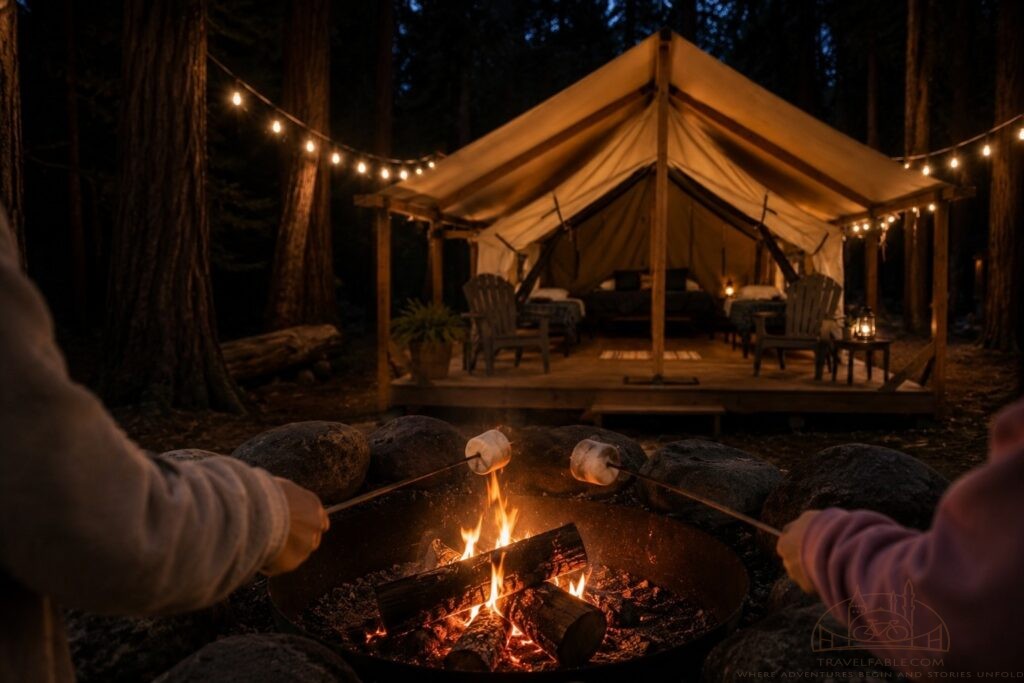
- Roasting marshmallows
- Collecting pinecones
- Exploring nearby trails
- Watching the stars
- Riding bikes
- Playing board games
- Learning about nature
Parents, meanwhile, can actually relax instead of spending hours assembling tents, inflating mattresses, or troubleshooting camping gear.
For families with younger children, that difference can completely change the experience.
Is Glamping Worth the Money?
One question we often hear is whether glamping is worth paying more than traditional camping.
For our family, the answer has been yes.
When we considered the cost of purchasing tents, air mattresses, sleeping bags, camping furniture, cooking equipment, lanterns, storage bins, and all the other supplies needed for traditional camping, glamping actually made financial sense.
It also meant we could arrive later in the day, settle in quickly, and spend more time exploring instead of setting up camp.
If you only camp once or twice a year, glamping is often a surprisingly economical option.
Best Time to Go Glamping in California
California offers excellent glamping weather for much of the year, but some seasons are more comfortable than others.
Spring (March through May)
Spring is one of our favorite times to go glamping. Wildflowers bloom across many parks, waterfalls are at their fullest, and daytime temperatures are comfortable for hiking.
Spring is especially beautiful in places like Yosemite, Mendocino, Big Sur, and the Sierra Nevada.
Summer (June through August)
Summer is the most popular season because kids are out of school.
Mountain destinations usually have pleasant weather, while coastal glamping locations stay cool even during inland heat waves.
Because this is peak season, reserve your campsite several months ahead.
Fall (September through November)
Fall offers cooler temperatures, colorful leaves, fewer crowds, and lower accommodation prices.
This is an excellent season for families who prefer quieter parks.
Winter (December through February)
Some glamping locations remain open year-round and provide heated tents or cabins.
Winter trips can be peaceful, but always check weather conditions before traveling.
How Far in Advance Should You Book?
Popular glamping sites near the Bay Area often book months in advance, especially for summer weekends and school holidays.
For the best selection, try to reserve:
- Summer weekends: 4–6 months ahead
- Holiday weekends: 6–9 months ahead
- Spring and fall weekends: 2–3 months ahead
Last-minute availability is possible during weekdays, but flexibility helps.
Choosing the Right Glamping Site
Not all glamping experiences are the same.
When traveling with children, look for locations that offer:
- Private bathrooms or clean shared restrooms
- Easy parking
- Short walking distance from parking
- Fire pits
- Picnic tables
- Nearby hiking trails
- Safe play areas
- Drinking water
- Family-friendly activities
If this is your first trip, choose comfort over adventure. Your first experience should be enjoyable enough that everyone wants to go again.
Weather Can Change Quickly
One lesson we’ve learned is that mountain weather changes much faster than city weather.
A warm afternoon can quickly become a chilly evening once the sun sets.
Even during summer, mornings and evenings can feel surprisingly cold.
We Always Pack
- Light jackets
- Hoodies
- Rain jackets
- Comfortable hiking shoes
- Extra socks
- Hats
- Sunscreen
- Bug spray
Layering clothing works much better than bringing heavy jackets.
Parking Tips
Most glamping properties provide one parking space per accommodation.
Before your trip, check:
- Whether parking is included
- Distance between parking and your tent
- Whether luggage carts are available
- EV charging availability
- Trailer or oversized vehicle restrictions
If your accommodation is a short walk from parking, consider bringing a wagon or rolling storage bin for transporting supplies.
Check-In and Arrival Tips
One mistake many first-time glampers make is arriving after dark.
Instead, try to arrive at least two hours before sunset.
This gives you enough daylight to:
- Check in
- Explore the property
- Unpack comfortably
- Prepare dinner
- Gather firewood
- Let kids explore safely
Everything feels much easier when you’re not rushing in the dark.
Best Time for Photos
If you’re visiting for beautiful family photos, timing makes a huge difference.
The best lighting usually happens:
Morning
- 7:00–9:00 AM
Evening
- One hour before sunset
These times offer softer light, fewer people, and more dramatic skies.
Midday sunlight can create harsh shadows, especially during summer.
Booking Websites We Recommend
There are many places to find excellent glamping accommodations.
Some of our favorites include:
- Hipcamp
- AutoCamp
- Under Canvas
- KOA Deluxe Cabins
- Glamp California
- Airbnb (Cabins & Tiny Homes)
- State Park Cabins
- Harvest Hosts (for RV travelers)
Always read recent reviews before booking, especially if traveling with children.
What Kids Learn While Glamping
One of the biggest surprises for us was how much our children learned simply by spending time outdoors.
Without screens, they naturally became more curious.
Glamping encourages kids to notice things they might otherwise overlook, like birds, insects, changing weather, animal tracks, stars, and different kinds of trees.
They also build confidence by helping with simple campsite jobs such as collecting kindling, organizing gear, setting the picnic table, or preparing snacks.
Our Philosophy as a Minimalist Family
Our family enjoys traveling often, so we try not to buy equipment that serves only one purpose.
Whenever we purchase camping gear, we ask ourselves three questions:
- Will we actually use this?
- Can it serve more than one purpose?
- Is it worth storing all year?
That simple approach has helped us build a small collection of reliable gear without filling our garage with items we rarely use.
Everything we’ll recommend in Part 2 is something we personally researched, purchased, and genuinely enjoy using.
Coming Up Next: Our Minimalist Glamping Gear List
Now that you already know the basics of glamping, the next guide covers the gear we actually pack.
My Minimalist Glamping Essentials: The Gear We Actually Use and Love
Instead of recommending hundreds of products, we’ll share the carefully chosen items that have made our trips easier, more organized, and more enjoyable.
We’ll explain why we bought each item, how we use it, and whether we think it’s worth the money.
If you’re building your first glamping kit, this list can save you both time and unnecessary spending.

You May Also Like

10 Kid-Friendly Museums Near the Bay Area for Summer Fun

Road Trip Travel Essentials with Kids and How to Load the Van Like a Pro